Photos of people who have died
Obituary and memorial images reused by fraudsters
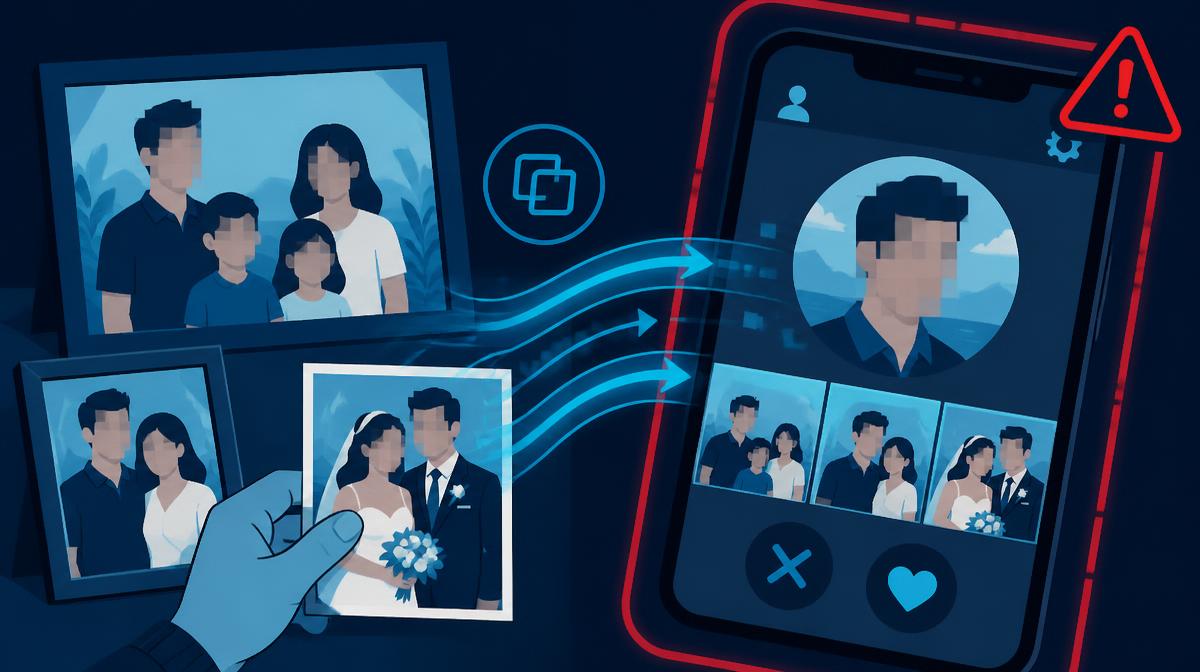
Memorial pages and obituaries are scraped for photographs and biographical detail, which are then used for romance personas, fake memorial funds and account takeovers.
Where the photos come from
Obituary sites, memorial Facebook pages, funeral home notices and local news tributes.
Personas built from them
- A romance persona who will never be contradicted by the real person
- A fake memorial fundraiser targeting the grieving family's network
- Identity details used to open accounts or claim benefits
Where they show up
Red flags
- A fundraiser for a funeral that the family did not create
- Friend requests from someone the family knows has died
- Memorial pages created by strangers soon after a death
- Requests for donations by transfer rather than through the funeral home
How to verify
- Confirm any memorial fundraiser directly with the immediate family or funeral home
- Report memorialisation to the platform so the real account is locked
- Ask the funeral home to limit publicly published biographical detail
- Report fraudulent fundraiser links and accounts here and to the platform
Why the dead are targeted
A deceased person cannot report the impersonation, cannot post a correction, and cannot appear in a video call to disprove it. Obituaries conveniently supply a full name, date of birth, employment history, hometown and family members — the exact fields needed both for a persuasive persona and for identity fraud.
Grief-targeted fundraising
Fake memorial funds are set up within hours of a death and marketed to the deceased's own network. Donors give quickly because hesitating feels disrespectful. The family usually discovers it while making funeral arrangements.
Protective steps for families
Memorialise or close social accounts promptly, ask the funeral home to keep personal details minimal, notify banks and credit bureaus of the death, and warn the family network that any fundraiser should be confirmed with a named relative first.
If these photos are yours
You are the second victim of this scam. The money goes to strangers, but the face, the name and the reputation are yours — and the angry messages from defrauded people land in your inbox, not the scammer's.
- Save everything: profile URLs, screenshots with visible usernames, message threads, and the dates you found them.
- Report the fake profile on the platform itself under impersonation, not spam. Impersonation reports are actioned faster and you can usually attach a photo ID.
- File a report with your national fraud body (IC3 in the US, Action Fraud in the UK, the Canadian Anti-Fraud Centre, or your local police cyber unit).
- Submit the scammer's contact details — the email, phone, wallet or profile handle, never your own — to our database so the next person who searches that identifier finds a warning instead of a fake romance.
- If someone contacts you believing they were talking to you, be kind and clear: send them to a search page so they can verify the details for themselves.
If you were talking to one of these profiles
Slow down before you send anything. Ask for a live video call on a platform the other person did not choose. Ask for a photo holding a handwritten note with today's date and an unusual word you pick. Run the phone number, email, username or wallet address through our database. A genuine person will pass all three in minutes; a stolen-photo persona will produce excuses — bad signal, hospital shift, offshore rig, army firewall, "you don't trust me".
Never send money, gift cards, crypto or copies of your own ID to someone you have not met in person, no matter how complete the story sounds.
Important
This profile describes a pattern of photo and identity theft. It does not accuse any person pictured in such photographs of wrongdoing — they are victims. We do not republish stolen photo albums. If a report on scamers.org names you incorrectly, use our I'm Innocent review process and we will investigate.
Related profiles
Deployed soldiers: the most stolen photos on the internet
Uniform photos turned into thousands of fake romance profiles
Generals and senior officers impersonated in fraud
High-rank portraits used to sell fake 'confidential' deals
Offshore oil rig workers: the 'no signal' alibi
Hard-hat photos that explain away every missed video call