Deployed soldiers: the most stolen photos on the internet
Uniform photos turned into thousands of fake romance profiles
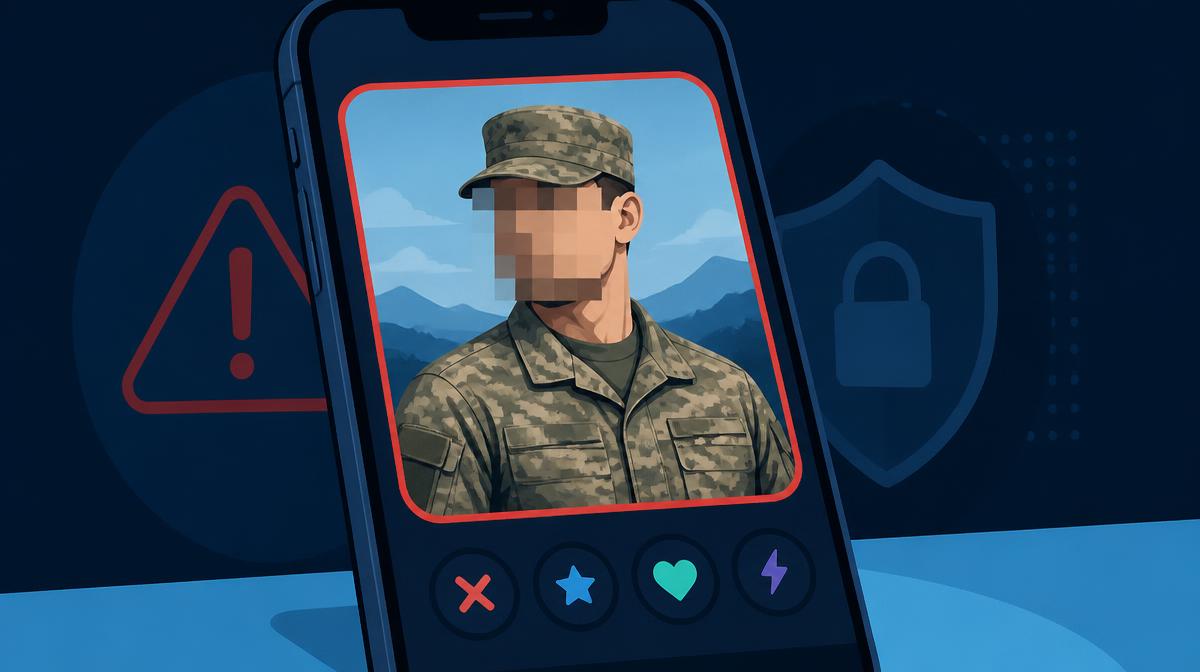
Photos of serving soldiers are the single most reused images in romance fraud. Here is where scammers take them from, the stories they attach, and how to tell a real servicemember from a stolen uniform photo.
Where the photos come from
Public unit Facebook pages, deployment photo galleries, news coverage of homecomings, and personal Instagram accounts left public.
Personas built from them
- Widowed soldier deployed to Syria, Afghanistan or a UN base
- Officer needing money for 'leave papers' or a communications allowance
- Peacekeeper asking you to receive a 'box of valuables' shipped home
Where they show up
Red flags
- Claims the military blocks video calls — it does not block personal video calls on leave
- Asks for money for leave, transport, a satellite phone, or a 'care package' release fee
- Rank, unit and uniform details that do not match each other in the photos
- Moves you off the dating app to Telegram, Hangouts or WhatsApp within a day
How to verify
- Real deployed personnel are never charged fees for leave, communications or shipping
- Ask for a live video call — then ask them to move the camera around the room
- Search the name, email and phone number in our database before replying again
- Reverse-search the profile photo; stolen uniform photos usually appear on dozens of profiles
Why soldiers' photos are stolen more than anyone else's
A uniform does three jobs for a scammer at once. It supplies instant authority, it explains why the person cannot meet you, and it explains why they cannot video call. That combination is worth more to a fraud operation than any other costume, which is why the same handful of deployment photos circulate for a decade across thousands of fake accounts.
The photos are almost never hacked. They are copied from public unit pages, local newspaper stories about a homecoming, charity fundraisers, and personal accounts that were public for a week. Once a photo set is harvested it is packaged with a name, a rank, a fabricated backstory and a set of ready-made excuses, then sold or shared inside scam compounds as a "kit".
The script attached to the stolen face
The persona is always emotionally isolated and geographically unreachable: recently widowed, one child in boarding school, posted somewhere with no leave and a strict commander. The relationship escalates fast — good morning messages, talk of marriage within two weeks — because the operator is running dozens of conversations and needs to know quickly who will pay.
The ask, when it comes, is never framed as a loan for the scammer. It is a fee charged by a third party: a leave-approval office, a diplomatic courier, a communications allowance, a hospital bill for the child. No real armed force charges any of these.
What real servicemembers face
The people in these photos find out when strangers start messaging them about money they never asked for. Some receive hundreds of messages a year. Careers have been disrupted, marriages strained, and in several publicly reported cases people have travelled to a stranger's home believing they were engaged to them.
If these photos are yours
You are the second victim of this scam. The money goes to strangers, but the face, the name and the reputation are yours — and the angry messages from defrauded people land in your inbox, not the scammer's.
- Save everything: profile URLs, screenshots with visible usernames, message threads, and the dates you found them.
- Report the fake profile on the platform itself under impersonation, not spam. Impersonation reports are actioned faster and you can usually attach a photo ID.
- File a report with your national fraud body (IC3 in the US, Action Fraud in the UK, the Canadian Anti-Fraud Centre, or your local police cyber unit).
- Submit the scammer's contact details — the email, phone, wallet or profile handle, never your own — to our database so the next person who searches that identifier finds a warning instead of a fake romance.
- If someone contacts you believing they were talking to you, be kind and clear: send them to a search page so they can verify the details for themselves.
If you were talking to one of these profiles
Slow down before you send anything. Ask for a live video call on a platform the other person did not choose. Ask for a photo holding a handwritten note with today's date and an unusual word you pick. Run the phone number, email, username or wallet address through our database. A genuine person will pass all three in minutes; a stolen-photo persona will produce excuses — bad signal, hospital shift, offshore rig, army firewall, "you don't trust me".
Never send money, gift cards, crypto or copies of your own ID to someone you have not met in person, no matter how complete the story sounds.
Important
This profile describes a pattern of photo and identity theft. It does not accuse any person pictured in such photographs of wrongdoing — they are victims. We do not republish stolen photo albums. If a report on scamers.org names you incorrectly, use our I'm Innocent review process and we will investigate.
Related profiles
Generals and senior officers impersonated in fraud
High-rank portraits used to sell fake 'confidential' deals
Offshore oil rig workers: the 'no signal' alibi
Hard-hat photos that explain away every missed video call
Doctors and surgeons working abroad
White coats borrowed to sell trust in minutes