Offshore oil rig workers: the 'no signal' alibi
Hard-hat photos that explain away every missed video call
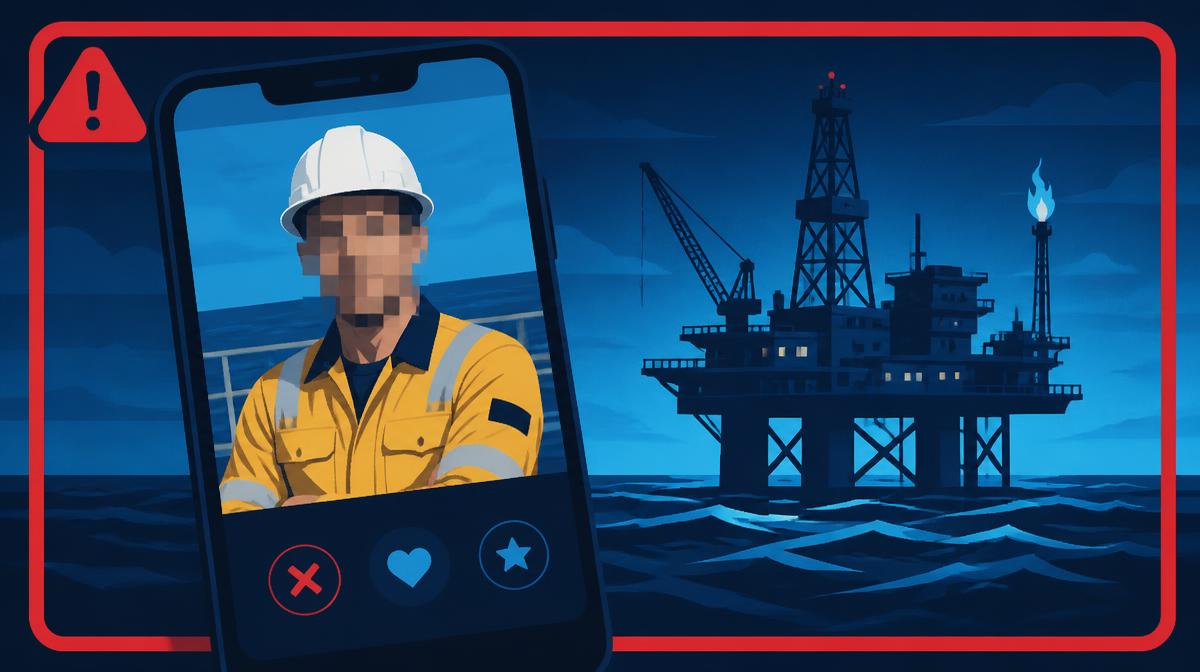
Oil rig and offshore engineering photos give scammers a built-in excuse for months of no contact, no video and no meeting. They are among the most reused stolen images in long-con romance fraud.
Where the photos come from
Company project galleries, LinkedIn profile photos, contractor recruitment pages and personal albums from rotations.
Personas built from them
- A widowed engineer on a six-month rotation in the North Sea or Gulf of Guinea
- A contractor whose pay is 'locked' until the rotation ends
- An engineer needing a duty fee released to fly home to you
Where they show up
Red flags
- Every call fails for 'satellite' reasons, but typed messages arrive instantly
- A large salary that is somehow inaccessible until an unlock fee is paid
- Photos in mismatched gear, different rigs, and different climates in the same week
- A promise to visit that always collapses days before the flight
How to verify
- Offshore workers on rotation have scheduled internet windows and can video call in them
- No employer withholds wages pending a payment from an employee's partner
- Ask for a photo holding a note with today's date and a word you choose
- Run the phone number and email through our search before sending anything
Why the rig story is perfect for fraud
An offshore rotation answers every awkward question in one sentence. Why no video? Bad satellite link. Why no meeting? Six weeks on, two off, and the two off got cancelled. Why the strange bank details? Offshore payroll. The stolen photographs — hard hat, coveralls, sea in the background — make the story visual and therefore believable.
The financial arc
These are slow cons. Nothing is asked for in the first month. The engineer is attentive, sends good-morning voice notes, discusses a future together in detail. Then a work incident occurs: equipment damaged, wages frozen, a contract penalty, a medical evacuation. The sums start small and grow, and each payment is framed as protecting a much larger sum that is about to be released.
The real engineers
People whose rotation photos are stolen describe a specific kind of harassment: strangers arriving in their LinkedIn inbox convinced they have been in a relationship for months, sometimes furious, sometimes heartbroken, occasionally threatening. Employers get dragged in. Some workers have had to make their entire professional presence private, which harms their own careers.
If these photos are yours
You are the second victim of this scam. The money goes to strangers, but the face, the name and the reputation are yours — and the angry messages from defrauded people land in your inbox, not the scammer's.
- Save everything: profile URLs, screenshots with visible usernames, message threads, and the dates you found them.
- Report the fake profile on the platform itself under impersonation, not spam. Impersonation reports are actioned faster and you can usually attach a photo ID.
- File a report with your national fraud body (IC3 in the US, Action Fraud in the UK, the Canadian Anti-Fraud Centre, or your local police cyber unit).
- Submit the scammer's contact details — the email, phone, wallet or profile handle, never your own — to our database so the next person who searches that identifier finds a warning instead of a fake romance.
- If someone contacts you believing they were talking to you, be kind and clear: send them to a search page so they can verify the details for themselves.
If you were talking to one of these profiles
Slow down before you send anything. Ask for a live video call on a platform the other person did not choose. Ask for a photo holding a handwritten note with today's date and an unusual word you pick. Run the phone number, email, username or wallet address through our database. A genuine person will pass all three in minutes; a stolen-photo persona will produce excuses — bad signal, hospital shift, offshore rig, army firewall, "you don't trust me".
Never send money, gift cards, crypto or copies of your own ID to someone you have not met in person, no matter how complete the story sounds.
Important
This profile describes a pattern of photo and identity theft. It does not accuse any person pictured in such photographs of wrongdoing — they are victims. We do not republish stolen photo albums. If a report on scamers.org names you incorrectly, use our I'm Innocent review process and we will investigate.
Related profiles
Deployed soldiers: the most stolen photos on the internet
Uniform photos turned into thousands of fake romance profiles
Generals and senior officers impersonated in fraud
High-rank portraits used to sell fake 'confidential' deals
Doctors and surgeons working abroad
White coats borrowed to sell trust in minutes