The DOJ Romance Fraud Network
34 named defendants, four convictions, one playbook
Case facts
- Region
- Nigeria / United States
- Estimated loss
- $15M+ across publicly documented cases
- Victims
- 130+ identified victims
- Filed
- Sep 14, 2026
Last reviewed .
Court record
- Court / jurisdiction
- Multiple U.S. federal districts — W.D. Wash., D. Colo., D. Mass., W.D. Mo., D. Neb., N.D. Tex., E.D. Tex., S.D.N.Y. and E.D.N.C.
- Case number
- See each individual dossier; Akindele 22-cr-00326-CNS (D. Colo.), Nwadavid 24-cr-10022-LTS (D. Mass.)
- Key dates
- Nebraska BEC/romance indictments unsealed, Treasury sanctions announced: 16 June 2020 (indictments returned 2016 and 2019)
- Northern District of Texas — 11 defendants indicted: announced 24 September 2021
- Eastern District of Texas — 23 defendants indicted: announced 24 September 2021
- Southern District of New York — 11 defendants, indictment unsealed: 13 October 2021
- Samuel Ugberaese indicted (E.D.N.C.): 22 January 2021; extradited May 2026
- Alex Ogunshakin extradited to Nebraska: October 2023
- Primary documents
- DOJ — 10 men involved in Nigerian romance scams indicted for money laundering conspiracy
- N.D. Tex. — 11 romance scammers charged (PDF)
- E.D. Tex. — two dozen defendants indicted
- U.S. Secret Service — 11 charged in SDNY money laundering network
- DOJ D. Neb. — Nigerian national extradited to Nebraska (Ogunshakin)
- U.S. Treasury — sanctions on the Nigerian BEC network, 16 June 2020
- FBI Cyber Most Wanted — Richard Izuchukwu Uzuh
- FBI Cyber Most Wanted — Felix Osilama Okpoh
- FBI Cyber Most Wanted — Micheal Olorunyomi
Docket numbers for the Texas, New York and North Carolina indictments are not stated in the public announcements.
An Operation Sunshine map of the Nigerian-linked romance fraud cases publicly documented by the U.S. Department of Justice and the FBI — four sentenced operators, two multi-defendant indictments in Texas and New York, extraditions from Nigeria and South Africa, and six names on FBI cyber wanted notices.
Romance fraud is no longer a lone stranger with a stolen photograph. The cases below, all drawn from public U.S. court records and law-enforcement notices, describe something closer to a distributed business: profile teams, script writers, "financial managers" who never speak to a victim, mule account networks, and crypto layering desks that move money out of reach within hours.
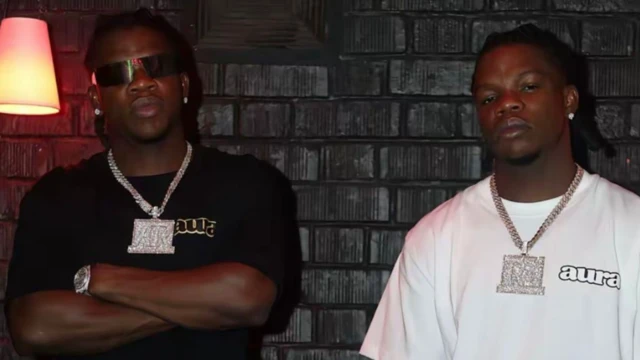
This dossier maps the publicly named individuals across four convictions, two multi-defendant indictments, two extradition actions and one cluster of FBI cyber wanted notices — and explains the operating pattern they share.
The four sentenced operators
- Franklin Ikechukwu Nwadialo — five years in federal prison. Eight victims, roughly $3.5 million. Worked Match and Zoosk under the alias "Giovanni".
- Adetomiwa Seun Akindele — nearly six years after pleading guilty to wire fraud and money laundering in a $1.6 million scheme against a single elderly American woman.
- Charles Uchenna Nwadavid — two years in federal prison (D. Mass., 24-cr-10022-LTS) for laundering more than $2 million in romance fraud proceeds through cryptocurrency.
- Ogolor Ronayerin Ogolor — three years for serving as the financial manager of a ring that took nearly $900,000 from more than a dozen victims.
Read together, those four sentences say something useful: the courtroom outcome tracks the *role*, not the charm. The man who never wrote a love letter — the financial manager — still went to federal prison.
The indicted: Texas and New York
Federal grand juries have charged multiple defendants in trans-border conspiracies, several tied to reporting on the Black Axe organised crime network.
Texas — romance fraud conspiracies: David Animashaun, Oluwalobamise Michael Moses, Irabor Fatarr Musa, Ijeoma Okoro, Chukwemeka Orji, Emanuel Stanley Orji, Frederick Orji, Uwadiale Esezobor, Victor Idowu, Afeez Abiola Alao, Ambro Sunday Ohide.
New York — romance and email compromise schemes: Oluwaseun Adelekan, Olalekan Daramola, Solomon Aburekhanlen, Gbenga Oyeneyin, Abiola Olajumoke, Temitope Omotayo.
Every name in this section is charged, not convicted, and is presumed innocent unless and until proven guilty.
Extraditions
Samuel Ugberaese was extradited from Nigeria to the United States over alleged cross-border romance schemes run with a co-conspirator. Separately, a group of six Nigerian nationals was extradited from Cape Town, South Africa, accused of taking more than $6 million from over 100 American women.
The extraditions matter more than the dollar figures. For two decades the working assumption among victims was that an overseas scammer is untouchable. These cases show a second assumption replacing it: money that lands in a U.S. bank creates U.S. jurisdiction, and jurisdiction travels.
FBI cyber wanted notices
The FBI has flagged Uzuh Richard, Alex Ogunshakin, Felix Okpoh, Micheal Olorunyomi, Benson Nnamdi and Abiola Kayode in connection with networks that blend business email compromise with romance fraud. That blend is the single most important analytical point in this dossier.
Analysis: why BEC and romance fraud share a spine
A romance victim is not only a source of money. She is a laundering channel with a clean banking history, a plausible reason to receive wire transfers, and an emotional incentive to lie to her own bank when it asks questions. Proceeds from a corporate invoice-redirect fraud are pushed through her account; the crypto desk converts; the ring keeps the spread.
That is why the same indictments keep listing both crimes. The romance side recruits the accounts. The BEC side fills them.
- Profile layer — stolen photographs, usually of military personnel, offshore engineers or surgeons: professions that explain absence, poor connectivity and sudden emergencies.
- Script layer — a standard arc of six to twelve weeks: contact, daily intimacy, a shared future, a first small crisis, then escalation.
- Finance layer — mule accounts, shell companies, gift cards, and crypto conversion. The people convicted fastest sat in this layer.
- Exit layer — the "release fee" endgame, and later a recovery scam run against the same victim by the same network.
Red flags that match these case files
- The relationship moves off the dating app to WhatsApp or Telegram within days.
- Every video call fails, or lasts seconds "because of the connection".
- The first request is small and repayable; the second is urgent and larger.
- You are asked to receive money and forward it — this is the point at which a victim becomes a defendant.
- Payment is requested in crypto, gift cards, or to a third-party name that does not match your partner's.
If this is happening to you
- Stop all payments. There is no fee that releases a frozen balance.
- Reverse-image search every photo. Save chats, wallet addresses and account names before blocking.
- Report to IC3 (ic3.gov) within hours — recovery of wires depends on speed.
- Tell your bank the transfers were fraud-induced, even if you sent them yourself.
- If you forwarded money for someone, get legal advice immediately.
- Refuse every "recovery agent" who contacts you afterwards. That is the second scam, run from the same list.
Search these names
Every individual named above is indexed in the scamers.org database with its source citation. Search a name, phone number, email address or wallet before you send anything to anyone you have not met in person.
Why read this here instead of the BBC, Fraud.org or Al Jazeera?
The BBC, Fraud.org and Al Jazeera reported these prosecutions as news events — one article per arrest, written for the day it happened. That coverage is excellent and it is over. This dossier does the thing a news article cannot: it aggregates every publicly named defendant into one searchable, permanently updated record. If a name from a dating profile appears anywhere in these cases, a single search on this site finds it in seconds — along with every other alias, wallet, phone number and platform attached to that person in our wider database. News tells you a case happened; this page tells you whether the person writing to you tonight is in it.
Why does a years-old case matter now?
Because the playbook has not changed — only the packaging. The script arc, the mule-account structure and the crypto cash-out layer documented in these prosecutions are the same ones running in 2026, now accelerated by AI-generated photos and cloned voices. Sentenced operators get replaced, not retired; the networks and the victim lists they built are reused. And the recovery scam — the same networks contacting their old victims posing as lawyers and recovery agents — means a victim from a 2019 case is still a target today. Old cases are not history here; they are the training data for recognising the current wave.
Why does this page deserve to rank?
- It is the only single-page index that ties these four convictions, two indictments, two extraditions and six wanted notices together with per-name, searchable database records.
- Every claim is sourced to primary material (DOJ filings, FBI notices), with a published correction process — verifiability a reader can check.
- It is structured for machines as well as humans: Article, Person and Breadcrumb schema, canonical URLs and named-entity records that search engines can resolve.
- It updates: new reports against these names appear here and in the database, so the page gets more useful over time instead of staler.
Legal disclaimer
This dossier aggregates publicly available information from U.S. Department of Justice announcements, FBI wanted notices and court records, published in the public interest as consumer-protection journalism.
Individuals described as sentenced or convicted are recorded as such on the basis of public court outcomes. Everyone else named here is charged or listed only, and is presumed innocent unless and until proven guilty in a court of law. Nothing here should be read as a finding of fact by this publication.
If you are named above and believe a statement is inaccurate, request a review through our I'm Innocent process. Verified corrections and right-of-reply statements are published within five business days.
Primary evidence
Named here and believe it's a mistake?
Every OSS file is eligible for review. Submit an "I'm Innocent" appeal with supporting evidence and a moderator will re-examine this dossier within 5 business days.
Request a review