The $500 Billion Scam Economy: Inside the 4 Fraud Industries Reshaping 2026
Annual global fraud losses now exceed half a trillion dollars. Inside the four industrial-scale scam playbooks — pig-butchering compounds, AI deepfakes, romance fraud, and World Cup 2026 event scams — and how to spot each one before you lose a cent.
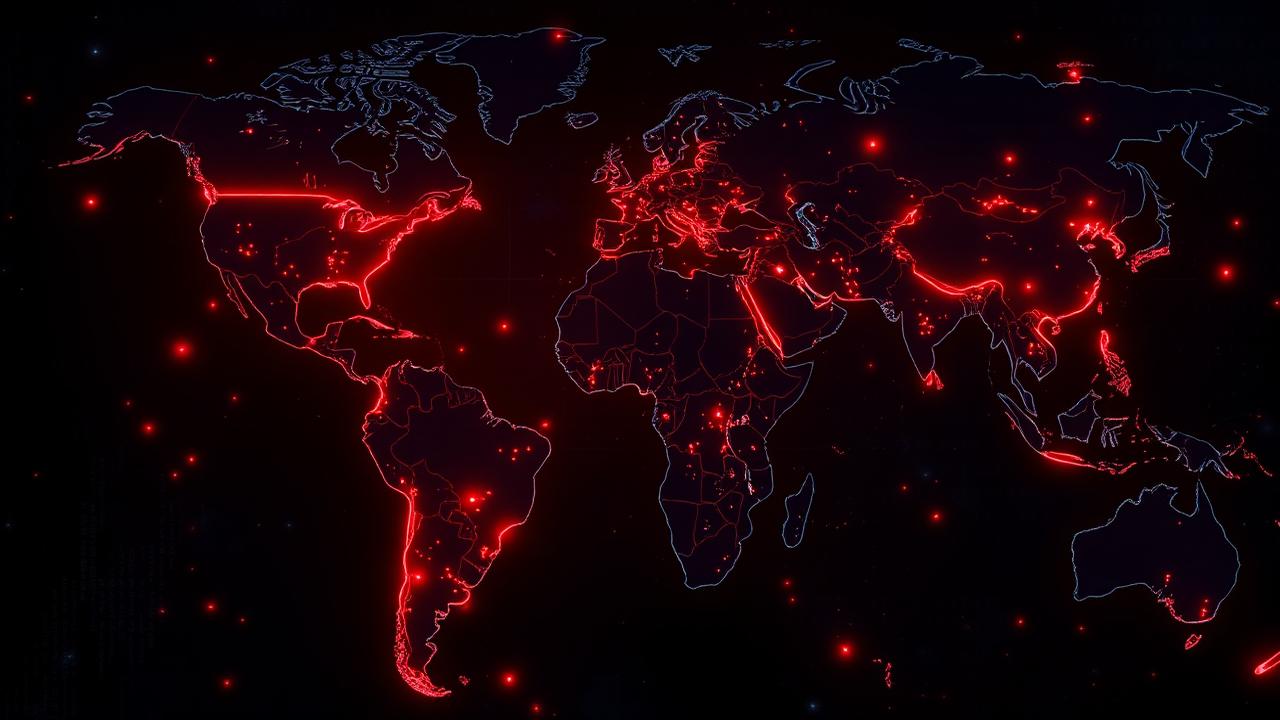
Global fraud is no longer a cottage industry of lone con artists. In 2025 it became a vertically integrated, AI-augmented, cross-border supply chain — with call-centre compounds, deepfake studios, scripted training manuals, and crypto laundering rails that move billions out of victims' bank accounts every month.
The numbers are staggering: the Global Anti-Scam Alliance (GASA) estimates worldwide losses now exceed USD 1 trillion when unreported cases are modelled in, and the U.S. Treasury alone tracked USD 10 billion stolen from American victims by Southeast Asian scam syndicates in 2024. The U.S. Justice Department responded by launching a dedicated Scam Center Strike Force in early 2025.
This is the field guide we wish every person on the internet had read last year. Four industries, four playbooks, and the early-warning signals that separate the curious from the cleaned-out.
1. Southeast Asia "pig-butchering" compounds
The single most lucrative scam on Earth right now is the sha zhu pan ("pig-butchering") long con — a hybrid of romance grooming and fake crypto investment, industrialised inside fortified compounds in Myanmar's Shwe Kokko, KK Park, and Tachileik, plus parallel operations in Sihanoukville, Cambodia and a fast-growing footprint in Laos, the Philippines, and Sri Lanka.
How the script works:
- A "wrong number" WhatsApp text, a Tinder match, or a LinkedIn DM lands in your inbox.
- Weeks of warm, daily conversation. The scammer is patient, attractive, and never asks for money.
- They casually mention a "family uncle" or "private trading group" that runs short-term crypto trades.
- You are pushed onto a slick-looking app (often a near-perfect MetaTrader or Binance clone) and given a small "winning" trade to build confidence.
- You deposit more. The dashboard always shows profit. When you try to withdraw, a "tax", "credit-score fee", or "anti-money-laundering deposit" appears — always payable in additional crypto.
- Silence.
Why it scales: The people typing the messages are themselves victims. Human-rights groups, the UN Office on Drugs and Crime, and Al Jazeera have documented more than 200,000 trafficked workers held inside these compounds, many lured by fake job ads for "customer service" or "Mandarin-Thai translators" and then beaten when daily quotas aren't met. Even after the much-publicised 2025 Thai-Myanmar crackdowns, human-rights groups report over 5,000 workers still trapped in militia-controlled centres.
The 30-second test: Anyone you've never met in person who introduces you to a "private" investment platform is running this script. There are no exceptions.
2. Global romance and "love" scams

Romance fraud is the oldest of the four — and the one being most aggressively re-tooled with AI. The FBI's Internet Crime Complaint Center (IC3) ranks it the #1 cause of dollar losses for victims over 60 for the fourth year running.
In May 2025, German prosecutors in Hessen secured prison sentences against 12 members of an international Nigerian-led network that targeted elderly and disabled victims across Germany, Austria, and Switzerland — collectively defrauding them of more than €11 million. The case is a snapshot of how the industry now operates: West African operators, European money mules, deepfaked U.S. military or oil-rig "boyfriends", and a back-end laundering pipeline through gift cards, gold bars, and Tether (USDT).
The 2026 mutations:
- Deepfake video calls. A 90-second WhatsApp video that "proves" your handsome surgeon in Yemen is real. The face is generated frame-by-frame from one stolen Instagram photo.
- Voice-only "shy" partners. When the target asks for a video, the scammer pleads bandwidth issues and sends a cloned voice note instead.
- Hybrid pig-butchering pivots. Once romantic trust is locked in, the script hands the victim off to a "trading mentor" — the same compound operators as scam #1.
Red flags that still work in 2026: refuses an unscheduled live video, only available at specific late-night hours, story includes oil rig / military deployment / UN doctor / overseas inheritance, eventually asks you to "help" with a fee, a customs charge, or a "stuck" wire transfer.
3. AI and deepfake impersonation

Generative AI cut the cost of a convincing scam by roughly 99%. Tools that cost a Hollywood studio millions in 2019 now cost a scam-compound supervisor $15 a month and 30 seconds of source audio.
The four attack patterns dominating 2026:
- The grandparent voice clone. A panicked "grandson" calls, says he's been in a car accident, and begs you not to tell his parents. Bond, lawyer, hospital — pick a fee. AARP estimates U.S. losses to grandparent-style impersonation alone topped $3 billion in 2025.
- The CFO Zoom deepfake. In one widely reported Hong Kong case, a finance employee wired $25 million after a video meeting with what appeared to be the company CFO and several colleagues. Every other face on the call was synthetic.
- The "proof-of-humanity" bypass. Deepfake video defeats basic liveness checks used by dating apps, crypto exchanges, and even some government ID verification flows.
- Hyper-personalised phishing. Public LinkedIn data + an LLM = an email that uses your boss's exact writing tics, references a real internal project, and lands in your inbox at 4:55 p.m. on a Friday.
Defences that actually work:
- Agree on a family safe-word today. No safe-word = no money, no exceptions.
- For any wire over a few thousand dollars, require a second-channel callback to a known number — not the one that called you.
- Treat every unexpected "urgent" message — voice, video, or email — as untrusted by default. Real emergencies survive a five-minute pause.
4. The 2026 FIFA World Cup and global-event scam wave
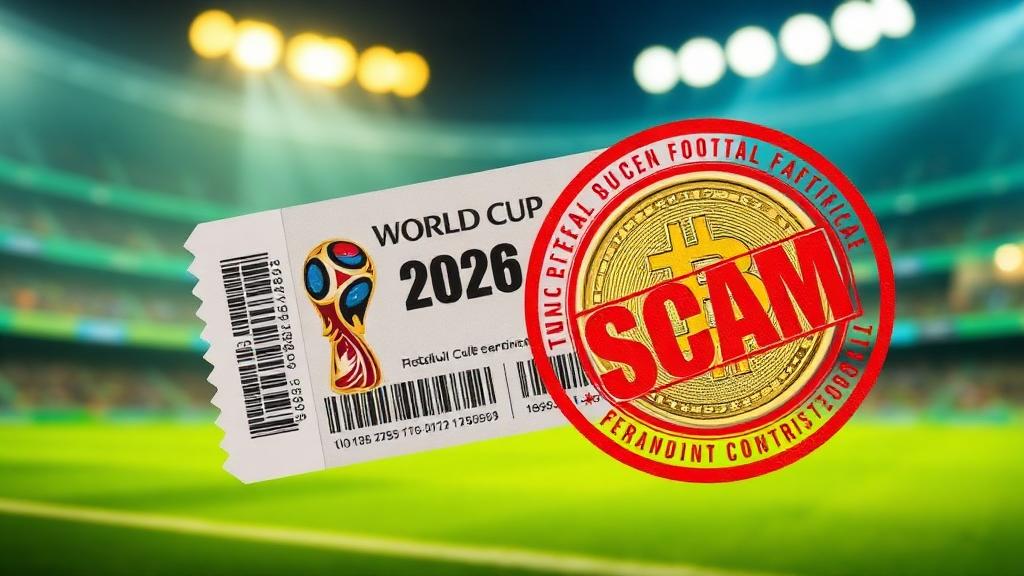
Every major global event is a fraud accelerant, and the 2026 FIFA World Cup — co-hosted by the United States, Canada, and Mexico — is on track to be the biggest scam target in sports history. With 6.5 million tickets, 48 teams, and roughly $11 billion in projected tourist spending, the attack surface is enormous.
What investigators are already seeing in early 2026:
- Fake "official" resale sites. Lookalike domains such as *fifa-tickets-2026.shop*, *worldcup26-passes.io* and dozens of others, often registered through Privacy Guard proxies less than 30 days before the listing goes live.
- "Guaranteed special visa" packages. Cameroon-, Nigeria-, and India-targeted Telegram channels selling fake B-1/B-2 sponsorship letters for $1,800–$4,000. The letters are forged; the buyer's passport scan is then resold to identity-theft brokers.
- Official-looking crypto fan tokens. Coins minted on BNB Chain or Solana, branded with a host country's flag, and pre-sold to "early supporters". Once the float is large enough, the deployer pulls liquidity (a "rug pull") and disappears.
- Last-mile Airbnb and hospitality fraud. Cloned listings for non-existent rentals near host cities, demanding a wire transfer to lock in a "below-market" rate.
The only safe playbook for World Cup 2026:
- Tickets: FIFA.com is the sole authorised channel until official resale opens. There is no exception.
- Visas: only the U.S. Department of State, IRCC (Canada), and INM (Mexico) issue real visas. No third party can "guarantee" one.
- Crypto fan tokens are not endorsed by FIFA. Any coin claiming otherwise is using the trademark illegally.
- Run any reseller, agent, or "fan club" through scamers.org before you pay.
What ties all four industries together
Strip away the surface and the four playbooks share the same five organs:
- A trust runway. Days or weeks of low-friction warmth — never an immediate ask.
- A spectacle of legitimacy. A polished dashboard, a deepfaked colleague, a logo that looks within 5% of the real thing.
- An "almost yours" moment. A profit balance you watched go up, a ticket already in your name, a fiancé already booking a flight.
- A small, "final" fee. Tax, customs, gas, KYC, anti-money-laundering deposit, transfer release fee. There is always one more.
- A laundering rail. USDT on Tron, gift cards, gold bars, Hawala, real-estate purchases in Bamenda, Dubai, or Phnom Penh.
If you can name those five organs out loud the next time something feels off, you have already beaten 90% of the scripts in circulation.
A short, durable defence checklist
- Slow it down. Every scam in this article relies on urgency. Sleep on any request involving money — 24 hours is fatal to a scam and irrelevant to a real emergency.
- Verify on a second channel. A different phone, a different app, a different person — not the one that contacted you.
- Reverse-image search every new face. Google Lens, Yandex Images, and TinEye are free and take 10 seconds.
- Treat unsolicited "investment" as fiction. Especially the kind that arrived after a romantic or friendly conversation.
- Search before you send. Run the name, phone, email, wallet, or domain through scamers.org first — if another victim has filed, you'll see it immediately.
Where to report — and why it matters
- United States: ic3.gov (FBI) and reportfraud.ftc.gov.
- United Kingdom: Action Fraud.
- European Union: your national CERT plus Europol.
- Canada: Canadian Anti-Fraud Centre.
- Australia: Scamwatch.
- Everywhere: file a free public report on scamers.org. The next victim's first action is almost always a Google search. A single public report is sometimes the only thing standing between them and the same loss.
Half a trillion dollars a year is what happens when the internet's fastest-growing industry has no border guards. The good news: every script in this article is defeated by a five-minute pause and a single second-channel call. The next decade of fraud will be won or lost in those five minutes.
Frequently asked questions
How big is the global scam economy in 2026?
Independent estimates from the UN, Interpol, the U.S. Treasury, and Chainalysis converge on more than half a trillion U.S. dollars in annual losses worldwide. That makes consumer-facing fraud larger than the global cocaine trade and roughly the size of the entire global cybersecurity industry.
What is a 'pig-butchering' scam?
Pig-butchering (sha zhu pan) is a long-con cryptocurrency investment scam run mostly out of forced-labour compounds in Myanmar, Cambodia, and Laos. Operators 'fatten' victims with weeks of friendly chat on dating apps, WhatsApp, or Telegram before steering them to a fake trading platform that lets them 'win' on paper and then refuses every withdrawal.
How do I spot an AI voice-clone scam call?
Hang up and call the family member back on their known number. Agree on a private safe-word with relatives now, before you ever need it. Real emergencies survive a 30-second callback; AI-cloned panic calls do not.
Are 2026 FIFA World Cup tickets being scammed already?
Yes. The FBI, FTC, and Mexican consumer-protection authority Profeco have all warned about fake 'official' resale sites, bogus crypto fan tokens, and 'guaranteed' visa packages. The only legitimate ticket source is FIFA.com — anything sold on social media DM, Telegram, or a freshly registered .shop domain is almost certainly a scam.
What should I do if I've already sent money?
Move fast. Call your bank to attempt a wire recall (best chance within 24–72 hours), file a card chargeback within 120 days, report crypto transactions to the receiving exchange's compliance team, and file with IC3.gov (US), Action Fraud (UK), or your national cybercrime unit. Then submit the scammer's identifiers on scamers.org so the next person's search returns a warning.